Learn
Get to know the living island around us.
Many kinds of life, shaped by water, slope and sea
We all share a fascination with Bowen’s living systems. Forest, streambed, shoreline and the surrounding sea are connected by water, wildlife movement and the shape of the land. They support many ecosystems that are home to a remarkable variety of life.
Bowen’s unique combination of rainfall, temperature, slopes and drainage creates microclimates where diverse plant and animal communities thrive.
Here are several ways to explore those connections.
Freshwater runs through the story
Streams, lakes, ponds, wetlands and riparian areas are the arteries of the island, distributing life-sustaining water through all island habitats. They are essential components of ecological corridors, allowing movement of animals, seeds and spores across the island.
Downstream, the condition of a creek, lake or wetland is influenced by what happens upslope in its watershed, including forest clearing, road runoff, pollution from farming, failed septic systems and dumping, and climate change, including summer drought and flooding from atmospheric rivers.
Connections Matter
Wildlife and water do not stop at the boundaries of protected areas. Forest on private land and intact vegetated shorelines can be components of ecological corridors, connecting vital habitat for many species of plants and animals. The Biodiversity Plan helps make these island-wide relationships visible.
What is biodiversity?
Biodiversity is the sum of all life as it occurs at multiple levels, from genes to ecosystems. It encompasses not only species diversity, but also the variation within species and the intricate functions that sustain the ever-changing, evolving web of life.
Life on earth comprises a tiny fraction of the planet’s mass, yet it is what makes our planet different from every other known place in the universe. Earth’s biodiversity has been shaped over several billion years into a fantastic interaction of many millions of distinct species, each molded by evolution for survival and persistence in a variable mosaic of habitats. This diversity of life – encompassing not just species themselves, but also their characteristic patterns of abundance and intricate roles and interactions – is encapsulated in the term Biodiversity. When we speak the word, we acknowledge this multi-layered hierarchy of life organized in self-regulating ecosystems.
Biodiversity is at risk because of the expanding presence and impact of humans. Since the rise of advanced civilizations, our planet has lost over 80% of its wild animal biomass and 50% of its plant biomass.
– from the Bowen Island Biodiversity Plan
Resources to explore
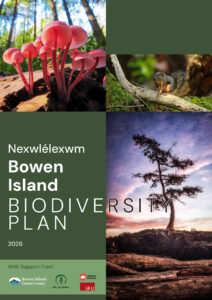
BOWEN ISLAND BIODIVERSITY PLAN 2026
See what the island-wide research reveals about ecological features, challenges, freshwater pressures and connections.
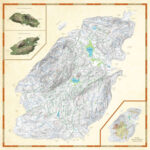
MAPS
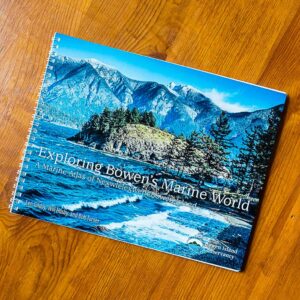
Use interactive maps, read plans, atlases, guides and management documents to learn about a place or answer a question in more detail.
ECOLIBRARY
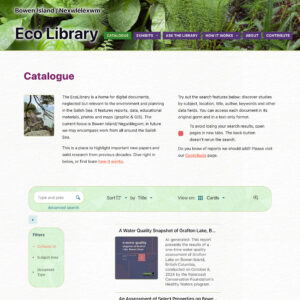
Our new curated collection of research and other documents about Bowen Island’s ecology from many sources.
PUBLICATIONS
Who we are and how we work. We’re a volunteer-led, community-based registered charity. Learn about our history, our board, and the strategic direction guiding our work through 2030.
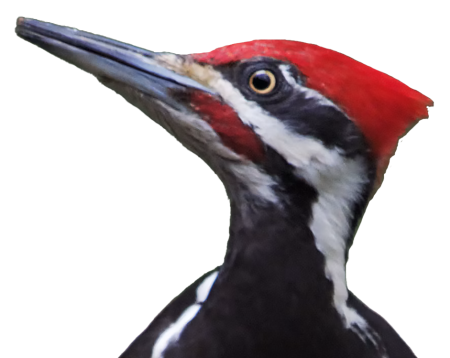
PILEATED WOODPECKER
Dryocopus pileatus
A KEYSTONE SPECIES is one which provides habitat or food for other species, often underpinning a full ecosystem. By excavating holes in old trees, these insect eaters provide homes for mammals and birds.
Invasive Holly and Broom bushes replace trees that woodpeckers can use. Join the conservancy and help us weed them out.