Each of Bowen’s protected places needs different kinds of care. What we do during a visit can affect a dry coastal bluff differently from a wet fen or a forested creek corridor. Learning a little about a place before setting out helps us enjoy it while leaving its most sensitive features undisturbed.
Before you go
Check the page for the place you plan to visit. Access, trail conditions and visitor guidance can change with weather, restoration work or management needs. A route that is suitable in one place may not be suitable in another.
Why established trails matter
A trail concentrates footsteps where the ground can best carry them. Stepping around mud widens the disturbed area and can damage roots, moss, wetland edges or shallow coastal soils. If a trail is saturated, closed or difficult to follow without leaving it, choose another route for the day.
Leave wild things where they are
Rocks, shells, moss, plants, fungi and fallen wood are part of the place. They shelter small animals, hold moisture and return nutrients to the soil. Enjoy photographs and observations without collecting, moving or arranging what you find.
Give wildlife time and distance
Wildlife may pause, hide, leave a feeding area or abandon a resting place when people approach. Watch from a distance, move calmly and avoid nests, dens and shorebirds. Never feed wildlife or share the precise location of a sensitive species publicly.

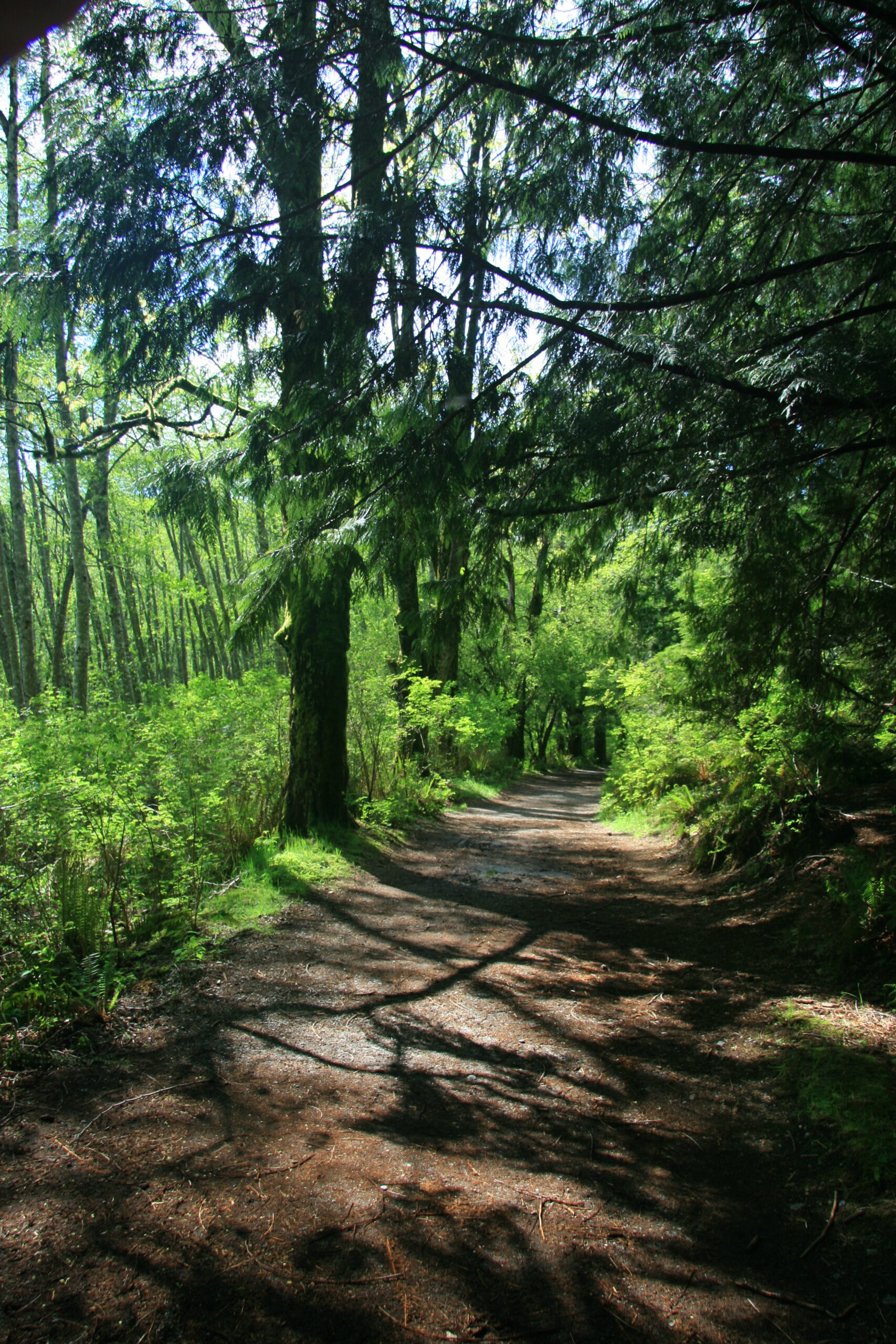
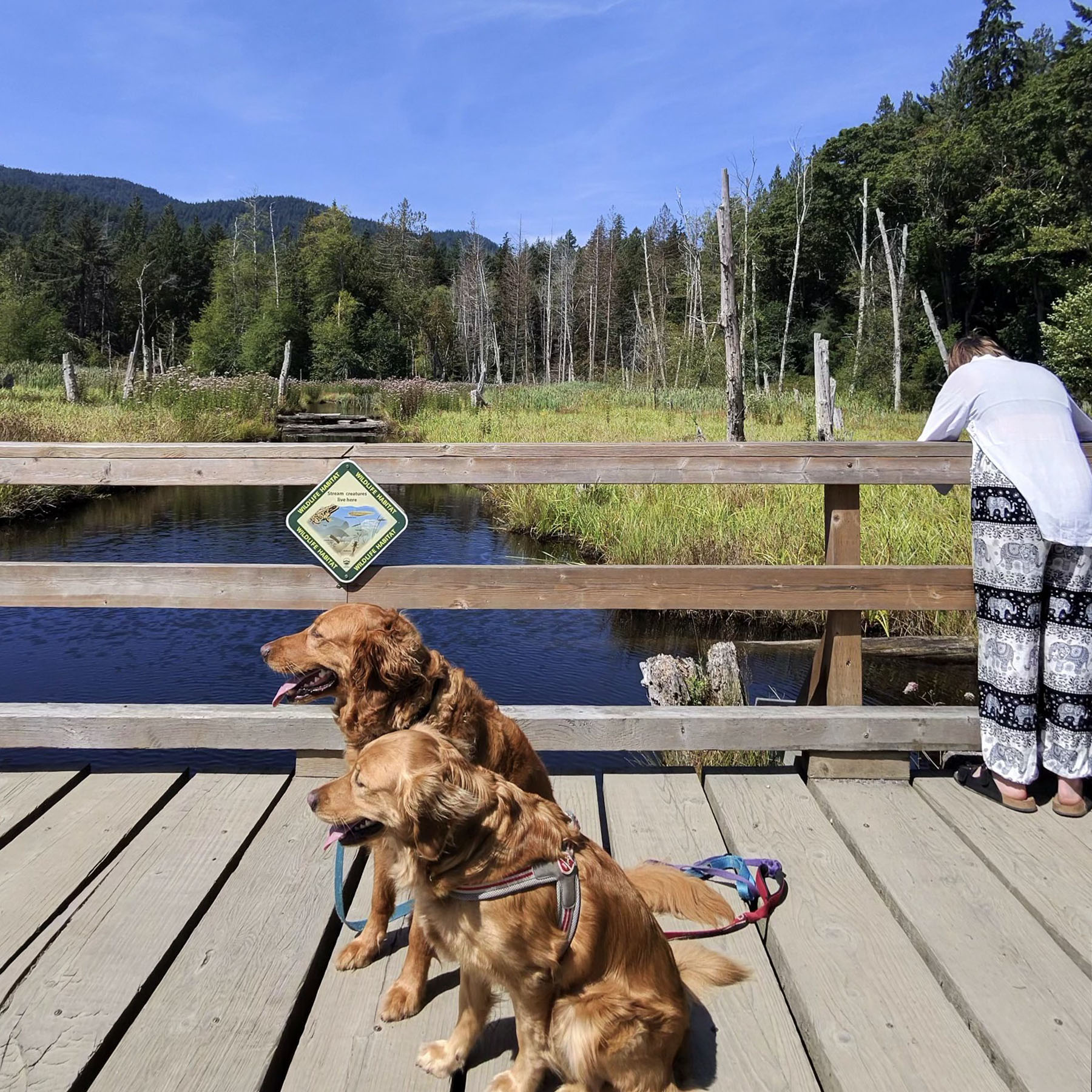
 Slower movement and quieter voices make it easier to hear birds, notice tracks and see how water moves through a place. Small groups also place less pressure on narrow trails and sensitive ground.