

Meet the Conservancy’s Scientists: Dr. Peter S. Ross
Bowen Island Conservancy
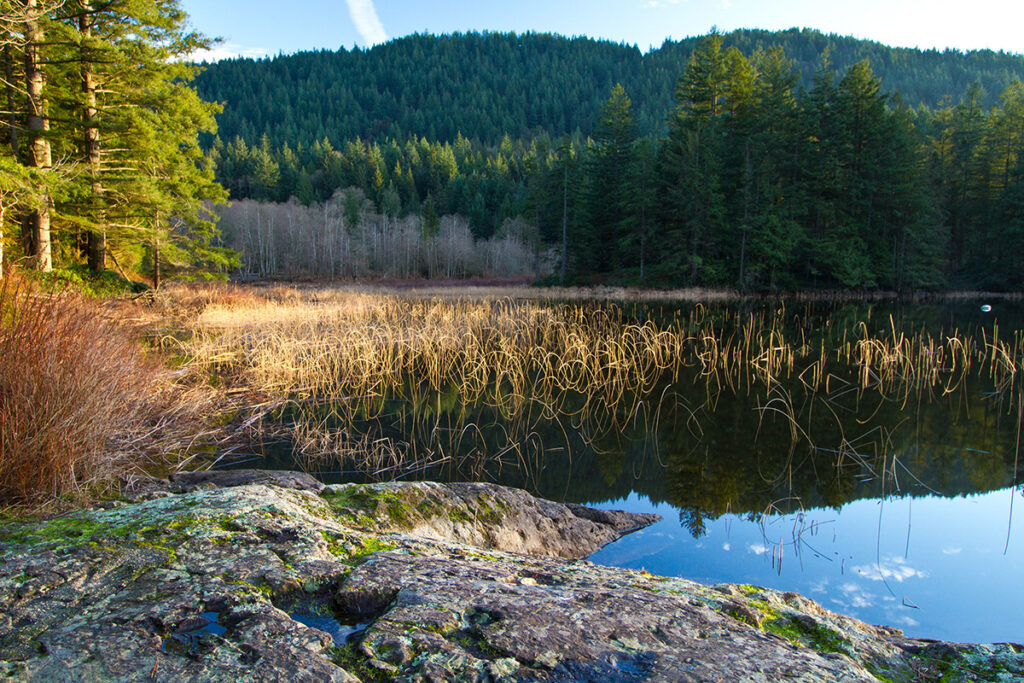
On October 8, 2024, Dr. Peter Ross collected a large water sample at the outflow of Grafton Lake for contaminant measurements. The work was familiar, as he has been sampling water throughout British Columbia as part of his pollution studies with Raincoast Conservation Foundation. This time, however, the work was closer to home, as Peter lives on Bowen, and the lake supplies drinking water to nearly half the island’s residents. It also supports fish habitat downstream in Terminal Creek and the estuary at Kwilákm. Peter was looking closely at water his own neighbours depend on.
Peter’s interest in pollution reaches back to age five, when he saw a television report about Tokyo police officers wearing gas masks in heavy air pollution. He imagined smog spreading over the whole planet. The image stayed with him and grew into a curiosity about where contaminants come from, how they move and what they do to living things.
Water Connects Us All
Peter Ross, along with Bob Turner and Will Husby, will together present “Water Connects Us All” at the Bowen Community Centre Theatre on October 24 at 2 p.m., followed by conversations about caring for Bowen’s water. We hope you can join us.
Harbour seals later became his “lab animal of the ocean,” helping him trace contaminants through marine food webs. Fieldwork left Peter with less formal memories, too. He estimates that seals bit him about 30 times and says, with some affection, that he probably deserved every one. They might also look him in the eye or doze briefly on his lap.
That curiosity led to decades of research on pollution in fish, seals and whales. Peter spent 16 years as a Fisheries and Oceans Canada scientist and later built pollution-research programs at the Vancouver Aquarium and Ocean Wise. His studies helped reveal high PCB concentrations in Pacific killer whales, and the widespread reach of microplastics in Pacific and Arctic waters.
Peter is now Senior Scientist and Healthy Waters Program Director at Raincoast Conservation Foundation. The program works with Indigenous Nations and community partners, pairing laboratory analysis with knowledge held in each watershed. Peter is not interested in “science for the sake of science.” He wants research to help communities understand and care for their water.
The Grafton Lake report is careful about what one sample can tell us. Raincoast detected 125 of 587 contaminants measured and described the lake’s overall water quality as fair. No drinking-water or environmental guidelines were exceeded, though guidelines are only available for a small fraction of the substances tested. Traces of several contaminants detected in Grafton Lake can be linked to human activity show why continued attention matters. Peter’s response has been measured. The findings point to the value of regular monitoring and a closer look at likely sources. Water treatment can make drinking water safer, but it cannot remove all contaminants or protect the fish and wildlife living in Grafton Lake or downstream.
For the Conservancy, Peter’s work strengthens the case for an island-wide freshwater protection strategy. Bowen Island Municipality is currently developing the Grafton Lake Watershed Management Plan. This Plan will guide how the watershed is protected, used, and managed over the long term. Caring for Grafton Lake reaches beyond its shoreline to the forests and wetlands that hold water, to the ocean that receives this water, and the choices made around homes, activities and septic systems.